Super Mario Galaxy 2
The sequel adds Yoshi, drill and cloud power-ups, and a new world map of ever stranger galaxies.
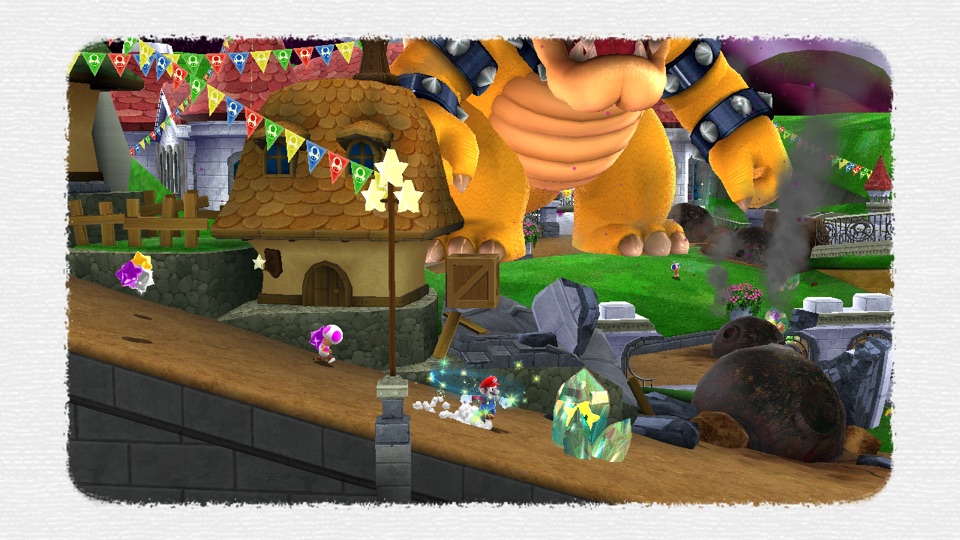
Szczegóły
| Deweloper | Nintendo EAD Tokyo |
|---|---|
| Premiera na Switch | 2010; Switch 2025 |
| Gatunek | Platformówka |
| ID tytułu | 0100FD8022DAA000 |
| Wersja | 1.4.0 |
| SDK | 18.3.5 |
| Silnik / deweloper | Nintendo EAD Tokyo (Wii, via NERD) |
| API graficzne | Vulkan |
| Rozmiar IPA | ~3 GB |
| Domyślny układ dotykowy | 3D |
| Liczba klatek | Jak na Switchu |
Jak działa (Tylko po angielsku)
Galaxy's Hagi layer on Galaxy's sdk build; the movie player's 384 MB reservation fits because the SDK's address-region node area is cut to 62 MB.
Update 1.4.0 (v393216) over the base game, SDK 18.3.5. NERD's Hagi Wii layer, as in Super Mario Galaxy (010099C022B96000): the Wii game's PowerPC code is statically recompiled into main, and Hagi stands in for the Wii hardware (GX on Vulkan with SPIR-V generated at run time, the DSP, disc reads from the RomFS). Modules main, subsdk0 (NintendoSDK_movie) and sdk, the last two Galaxy's builds; subsdk1–subsdk4 (GLSLC, nn::pcm, NVIDIA's OpenGL and Vulkan drivers) are not loaded. Everything Galaxy needed from the Vulkan layer and the host carries over; the profile is Galaxy's with its own memory layout and shader list.
Znane problemy
- Effects drawn as points or lines come out one pixel wide.
Pakowanie
Umieść grę podstawową i aktualizację (NSP lub XCI) w jednym folderze i uruchom:
python3 scripts/build_ipa_from_nsp.py ~/Games/super-mario-galaxy-2 -k ~/keys/prod.keys